You know what's funny l remember not knowing anything but could could play the music. I never went to school to read music and lm glad I didn't. There's a story of that.
When you get an artist to tell you to do a triad and the root note is natural C to get to the next chord its embarrassing not to know.
So l learned and leanring the chord letters, flat, sharp etc helped to work faster.

Like the signal markers under the C note l can't read but l know C note Eb=E-flat etc. See l can read your staff like that.
So people do have to learn and not stay stagnated.
I'll say, being able to read is a necessity in everyday functions knowing how to tead a staff is not for typical person.
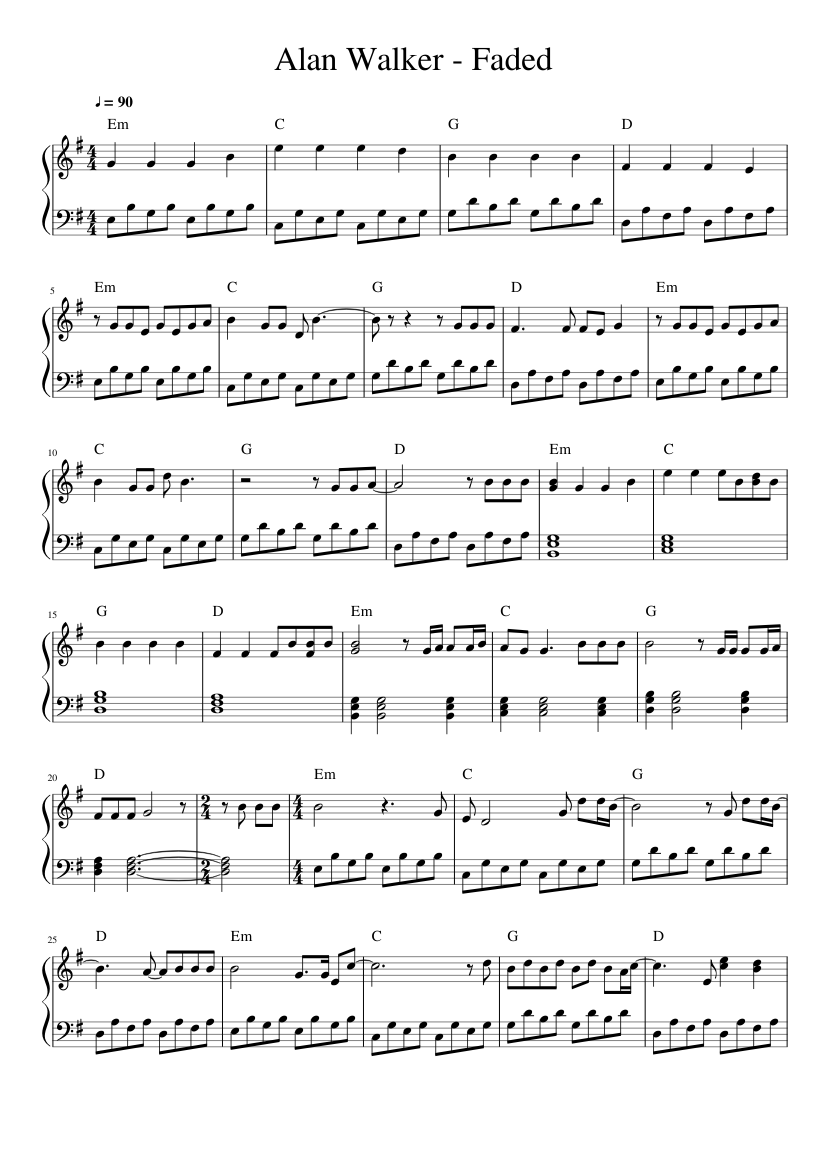
I have a home girl a top rank classical pianist. She can only play if there is a staff in front of her. She couldn't make a track without sheet music to save her life. She envy me cause of that. I can sit down and compose music on the fly with sheet music. From your sheet music you have Em=E-minor, G, D, C etc. It doesn't look complicated but ask me like 6 years ago it looks like Paleo Hebrew lol
For moods of the chords will set the melodies in a scale.
Like Dorian mode, Major, Minor, Phygian, Pentatonic, Diminishined, Suspended , Diatonic etc. When l leraned these things l was like

is all this. When learned and applied my music automatically changed.
CharlesRandolph wrote:It's really not about acting less smart. Some people just do not learn from manual. It's like musicians who can sight read music, but can't play by ear and vice versa.
If asked you, can you transpose this piece to B♭3 for flugelhorn. (This is only assuming you can't read music.) Does that make you Lazy or not smart because you can't do it? If you've played music for +10 years, this should be really easy right? You ask for help, and I tell you to read the notation it's all there.