


By DataBass
Sun Sep 16, 2012 8:07 am
I'm new too the forum and was wondering if any of you are into Juke, Footwork, or Trap music. I did a search on the forum & did not find much on the genre. I'm still a bit new to the genre's myself so please correct me if I'm wrong. I'm sure your wondering what the hell Juke & Footwork music is so I'll give a little background, I'm sure some of you know what Trap is already but I'll still give a few examples.
It came to my surprise that Juke & Footwork aren't exactly the same genre if even a genre. I came across this site that gives a better idea of what Juke & Footwork really are, a Chicago teacher / Footwork producer explains:
Ghetto house, or booty house is a type of Chicago House which started being recognized as a distinct style from around 1992 onwards. It features minimal 808 and 909 drum machine-driven tracks, and sometimes sexually explicit lyrics.
Using the template of classic Chicago House music (primarily, Its Time For The Percolator by Cajmere), and adding the sexual lyrics. It has usually been made on minimal equipment with little or no effects. It usually features a "4-to-the-floor" kick drum (full sounding, but not too long or distorted) along with Roland 808 and 909 synthesised tom-tom sounds, minimal use of analogue synths, and short, slightly dirty sounding (both sonically and lyrically) vocals samples, often repeated in various ways. Also common are 808 and 909 clap sounds, and full "rapped" verses and choruses.
Chicago Juke
The 2000's have also seen a rise in Chicago Juke, a faster variant of Ghetto House which began forming in the late 1980s. Chicago Juke songs are generally around 150-160 BPM with kick drums, usually in a One-And-Two A-And-Four style pattern, pounding rapidly (and at times very sparsely) in syncopation with crackling snares, claps, and other sounds reminiscent of old drum machines. The production style is often markedly low-fi, much like Baile Funk. Chicago Juke evolved to match the energy of footwork,a dance style born in the disparate ghettos, house parties and underground dance competitions of Chicago. RP Boo, a former footwork dancer, is generally credited with making the first songs that fall within the canon [1] Living hand in hand with juke music, footwork is one of the last untapped (and resultantly, unfiltered) hood dance music styles in the world.[2] Footwork is a controlled and complex moving of the feet at high speeds, a modern form of house dance footwork and Breakdancing footwork. A couple prominent producers in the Chicago Juke and booty house canon are artists like Dude 'n Nem, DJ Slugo, and DJ Tha Pope. Tha Pope's song "Bob That Back Down" has over 1 million views on one YouTube post,[3] and well over 2 million views across all YouTube postings of the song. However, Tha Pope remains a relatively obscure producer. This is a salient example of the way Chicago Juke has flirted with wider acceptance in the past decade (though regional popularity certainly accounts for some of those views). Nevertheless, Juke has yet to form any solid mainstream presence, and is probably more visible in the mainstream through its influence on the current generation of producers.
Juke and Europe
Juke/Footwork has been popular in the clubs of Europe particularly in Paris and Brussels for a number of years with the Booty Call club nights and artists such as Kill Frenzy and DJ Hilti putting out releases via the Juke Trax label. It has however only recently begun to flourish in UK clubs, due to the "Bangs and Works Volume 1" compilation on the Planet Mu label. Though earlier releases by DJ Slugo can be found on UK label WIDE, Planet Mu were the first to grab any media attention.
Various artists evolving around what is often labeled by various subcultural media as the deeper or rather avant-garde sub-sonorities of dubstep music, have started to integrate juke elements to their works in the last few years, perhaps subsequently to the recent bloom of juke music in Europe. Labels such as Swamp81 and artists such as Addison Groove and Ramadanman have started to incorporate elements of juke and ghetto house to their recent productions.
taken from http://en.wikipedia.org/wiki/Juke_music
It came to my surprise that Juke & Footwork aren't exactly the same genre if even a genre. I came across this site that gives a better idea of what Juke & Footwork really are, a Chicago teacher / Footwork producer explains:
WHILE FOOTWORK CONTINUES to find its place within the electronic music consciousness, many listeners and critics are still unclear on how to accurately absorb it for interpretation and translate it to discussion. One of the most common mistakes, and one jazner has been guilty of on occasion, is using the terms ‘footwork’ and ‘juke’ interchangeably, as if the two were inseparable as a kick and a snare.
Here to set the record straight is Chicago’s very own Nate Boylan, a high school science teacher by day, footwork producer by night, and Ghettoteknitian for life. You may remember Boylan from his contribution to Planet Mu’s Bangs & Works Vol. 2, the impeccable, sped up Sade sampled “Bullet Proof Soul” sticking out as one of the comps many highlights, a track that was also used in an Addison Groove mix earlier this year
Boylan was kind enough to break down the basic elements of footwork, how it differs from juke, and what the ghettotekz life is all about, clearing the air for all of us outside of Chicago.
Take your seats, students, Footwork 101 is about to begin.
What are the differences between juke and footwork?
Both ‘types’ of music can be considered ‘tracks’. That’s what we call them.
Juke really isn’t a type of music, but a style of dancing to ghetto house. Juke is commonly used as a verb, as in “that girl was jukin me on the floor” (basically like having sex with clothes on) or “damn that party was jukin.” Juke tracks bear a much closer (to the ear of most people outside of the south and west sides) resemblance to ghetto house (DJ Deeon, DJ Milton, DJ PJ, DJ Funk, etc).
Footwork is another form of tracks (the general word that means house music) specifically used in footwork battles by various dance crews around the city (Wolf Pack, T.S., LOTNS, Taliban, etc). Many footwork tracks are specifically made for different crews (TS Hoe by DJ Rashad). Footwork is much less commercial than most juke tracks and really is best understood in the context of events such as Battlegrounds (on 87th and stony island), T.U.F.F. (on 87th and hermitage), war zone (Wala’s event), the Bud Billiken parade and after-parties. In Chicago currently tracks mainly come in the footwork flavor, also known as juketronik, gutta etc.
Break it down in the following contexts: Musically (beats, rhythms, pulse, samples, techniques, technology, etc)
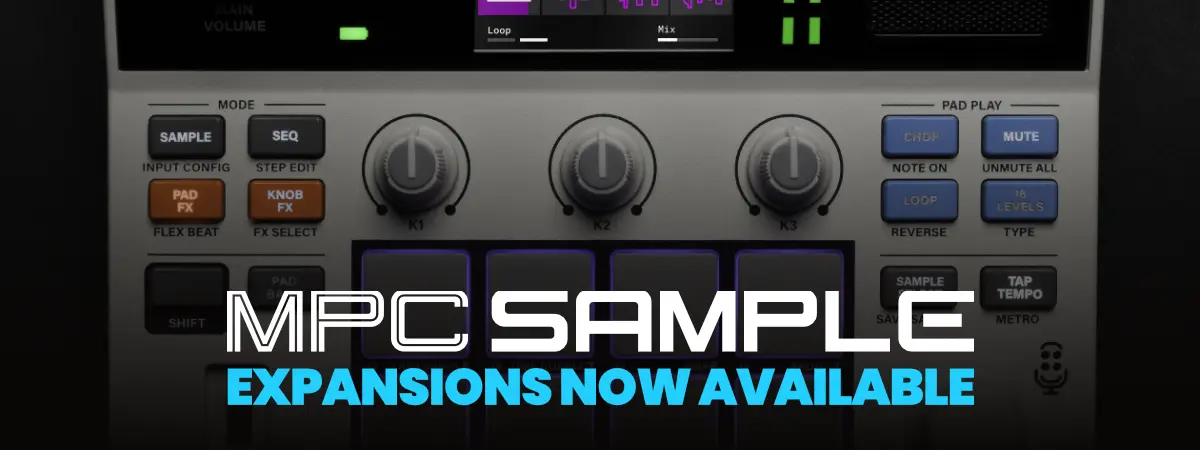
There is a distinct four pattern embedded in tracks, which seems to be mostly not understood by producers outside of Chicago. It sounds random, but the drums match the sample/synth. Theres almost always a clap or snare holding down the four count. In my production crew (Ghetto teknitianz aka ghettotekz) we mostly produce using MPC’s of some variety (2000 XLs, 2500s, 1000s) and emu, Roland and Akai synths. Some people use software to produce, but the real juice seems to flow best from the MPC.
Socially
Juke really came from DJ Puncho and Gantman and Jammin Gerald and Traxman in the late 90s early 2000s.
DJ Rashad and Spinn and RP boo basically took it to the footwork level in the late late ninties and have been making hot tracks for over 12 years. Interesting side note: I teach high school science at the same school that Rashad and Spinn met at in homeroom as students. Its part of the Southside/South Central suburbs/Westside tradition that we hold down the footwork at Thornwood. Many many many Thornwood students are also dancers and/or producers.
Culturally (gatherings, battles, crews, swagger, etc)
Footwork battles: the real shit. Kids get together and battle, winner by audience reaction. Sometimes there’s money involved. In many ways the battles provide a constructive method of helping teenage kids stay out of trouble, because in Chicago there’s plenty of trouble that kids can get into.
As far as who runs it, I’d have to say that the Tekz run the South. If you go to any battles you are almost 100% sure to hear at least one track by one of the guys.
We also do Northside events like JukeFest every summer where we get to bring tracks to groups of people who otherwise wouldn’t come down to the Southside/Westside events.
Can you describe what a juke / footwork battle is like for people that have never been to one? What are the vibes, the energy, the sounds, smells and feelings overall?
It starts out quiet and sparse and as people fill in the warm-ups begin. Often a side room will have mirrors for practicing. By 10, the dj will start dropping tracks that are ice cold and usually will drop a few new tracks that he produced maybe specifically for the event in progress. The vibe is usually competitive but positive. The feelings depend on your mood, lol that’s an interesting question. The vibes are bass out of subs and hot new tracks.
taken from http://jazner.wordpress.com/2012/02/21/the-science-of-footwork/
Thanks Boylan for clearing things up! For more info follow the link above.
Last edited by DataBass on Mon Sep 17, 2012 8:03 am, edited 1 time in total.


