Discuss the various methods you use in music production, from compressor settings to equipment type.

By Tha Saint Mon Oct 03, 2005 6:44 pm
"I'm takin music theory.. But i'm only taking it so i can get a easy "A" to keep my GPA up. "


Its that easy hey....is that you're incentive with music theory...just to getr an "eazy A"?

By skmagnum Tue Oct 04, 2005 7:32 pm
im taking music theory rite now at Berklee online...damn its only week 3 and ive learned so much. watch my beat game step up! i think you should take it. no sense in buying all this outboard equipment and not get any mental equipment...

By elmacaco Tue Oct 04, 2005 10:37 pm
got any berklee pdf's or whatever to share with the fam? Any kickdowns will work.

By scorpion1082 Wed Oct 05, 2005 9:17 am
skmagnum wrote:im taking music theory rite now at Berklee online...damn its only week 3 and ive learned so much. watch my beat game step up! i think you should take it. no sense in buying all this outboard equipment and not get any mental equipment...


See, there you go! It does help. No matter if you're Mozart or Primo, music theory does affect the way musical production sounds.

I think it's a combination of natural talent and musical training. Having one without the other doesn't help anyone.

Even though musicans that play by ear don't know much theory, they still follow the rules(knowingly or not). They say these musician are more talented, but this method will catch up to them in the long run(if they wanna become serious musicians or producers).

Trained musicians know all of the rules and can manipulate their music however they'd like. They have endless resources to use when creating music. A trained musician wouldn't have to ask "How do you write a chorus or bridge for a R&B song?"

Don't get me wrong though, an untrained(and talented)producer could do that too(untrained musicians and producers have listened to countless hours of their favorite music since they were children, like myself, but I can read music. I didn't learn how until I was in the 7th grade. Music class in Oklahona is mandatory in elementary school, grades K-5 or 6. Between that and my run for my chruch choir, that's how I got all of my musical traning.)

Untrained musicians have to "feel" the music more.

Trained musicans could give the technical explanation of their own(or anyone else's)music.

Like I said it's good to have both aspects.

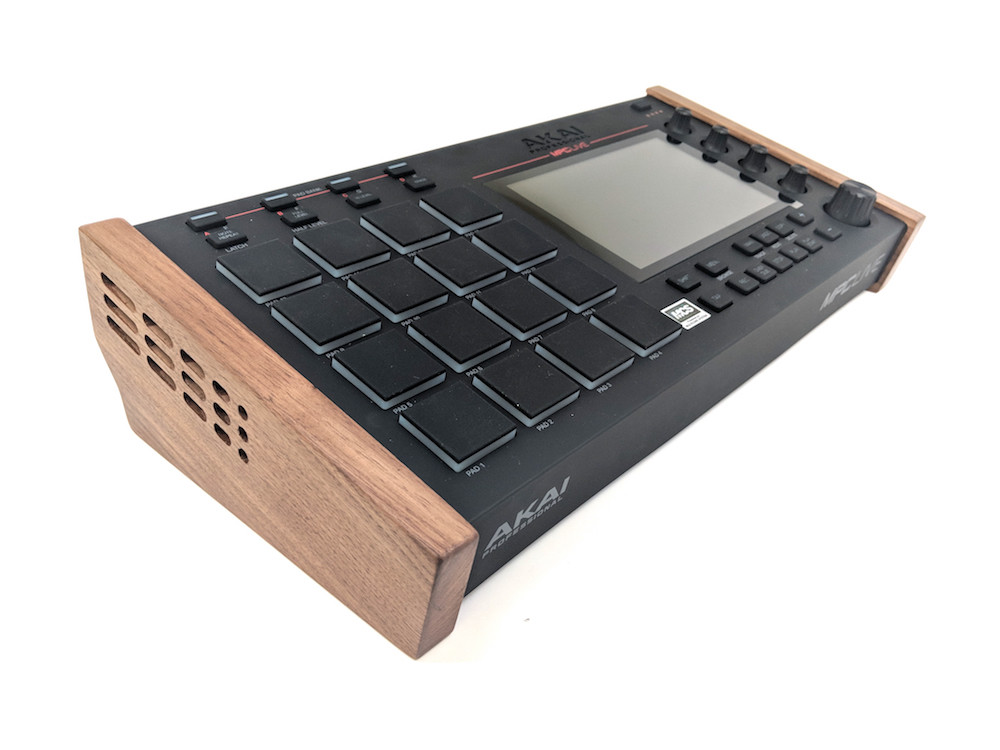
Buying a MPC without any one of these abilities is suicide. But it has been done.

User avatar
By classic Wed Oct 05, 2005 1:18 pm
If you wanna good all around theory refernce book i suggest Tonal Harmony
By Sefan Kostka & Dorothy Payne.

THis book is the standard for second/3rd year music majors around the country, its the book i learned from as well and its very well written. It does a good job of explaining things

The book does assume that you have knowledge of music structure and notation and a basic theory foundation. So don’t cop it unless you at least know the difference between a major or minor scale, or know the major scale intervals etc....

The book does a great job of walking you threw the various aspects of music theory from the fundamentals to advanced topics. It also discusses the foundation and history of tonal music(which is what all western music is based on today, even hip hop)What’s cool also is the more recent editions come with CD's and workbook exercises so you can hear the examples...
I still use it as a reference and i would recommend it to anybody who is serious about learning theory...

Now there are much more advanced theory books/topic's out there espically when u start gettin into the diatotic stuff. A-tonal etc... but honestly thats not practicle for modern music.... Espically hip hop & R&B. If you have a solid foundation your good.

Also to all the cats learning theory, I think Ive said this before, But anyway
If you don’t already know how to play an instrument, It’s best to learn an instrument and theory at the same time so you can apply the theory techniques.

Theory without practical application is like reading an mpc manual without owning MPC and claming you know how to use the machine.
To truly understand you need some practical application


My 2 cents

class....
Last edited by classic on Wed Oct 05, 2005 1:45 pm, edited 1 time in total.

By skmagnum Wed Oct 05, 2005 1:40 pm
i dont have any pdf's yet, all i got was the book that compliments the course, but if i come across some ill def hit you up on that one!
User avatar

By Bezo Wed Oct 05, 2005 1:54 pm
guesswhosback wrote:i spose it can be helpful but why not just freak it how you want
Why do you assume you can't freak it like you want if you know theory?

guesswhosback wrote:fair enough you might murder all music theories in the process and have these college boys cutting off their ears but **** em

theres no wrong and right involved in good music
There's no wrong or right in music theory either. I think the misconception is that "Theory" is this set of rules you have to follow. Theory is just the science and language of music. It accounts for all notes, chords, time signatures, rhythms, ect. Music made by someone that has no idea about theory still can be explained by theory. Even the worst sounding, most dissonant music uses theory.

My point is, stop thinking about theory as a set of rules. Think of it more like a way to think & communicate musically. The more theory you know, the less you have to rely on trial and error. Instead of "playing around" on the keys, you'll know exactly what keys to hit to produce the sounds you want.

By scorpion1082 Wed Oct 05, 2005 3:07 pm
Bezo wrote:
guesswhosback wrote:i spose it can be helpful but why not just freak it how you want
Why do you assume you can't freak it like you want if you know theory?

guesswhosback wrote:fair enough you might murder all music theories in the process and have these college boys cutting off their ears but **** em

theres no wrong and right involved in good music
There's no wrong or right in music theory either. I think the misconception is that "Theory" is this set of rules you have to follow. Theory is just the science and language of music. It accounts for all notes, chords, time signatures, rhythms, ect. Music made by someone that has no idea about theory still can be explained by theory. Even the worst sounding, most dissonant music uses theory.

My point is, stop thinking about theory as a set of rules. Think of it more like a way to think & communicate musically. The more theory you know, the less you have to rely on trial and error. Instead of "playing around" on the keys, you'll know exactly what keys to hit to produce the sounds you want.


All the more reason to know theory. If you can't speak that language, you're gonna sound f**k up and no one will understand(just like language).
User avatar

By itchyvinyl Wed Oct 05, 2005 6:47 pm
Knowing theory of rhythm will no doubt help beat making.....knowing how to read/write rhythms, how to count beats/bars.......it helps, especially since these drum machines are set up according to actual rhythmic theory/music notation anyway.
User avatar

By Cheech Wed Oct 05, 2005 7:03 pm
besides the more you know about the rules, the more you can break them


that's if you want to


i just make good music


whether good or bad :D
User avatar

By DrFunk7777 Wed Oct 05, 2005 8:33 pm
All true. All good.

I don't think there is any such thing as "bad" knowledge. Know how to create a pattern goes back to Time signatures, Note values, BPM...
It's hard to figure out why your "beat" doesn't "swing if you don't know what makes a 16th note triplet.

Just learning rythm basics 101 will help.

By Knoxximus Thu Oct 06, 2005 12:13 am
Bleh...it's just in me. I mean, my Mom put me in music school when I was a LITTLE kid, and I was writing sheet music with paper and pencil when I was like 7-8, but I don't recall taking any actual music theroy classes. I'm thinking about picking up piano again (haven't played in years), but I ain't got the time right now.

When I create, I just go by feeling, and I never fight it. When the music tells me to do something, I just do it. Don't think too hard about....that's when you jack it up. You gotta just let it flow. 8)